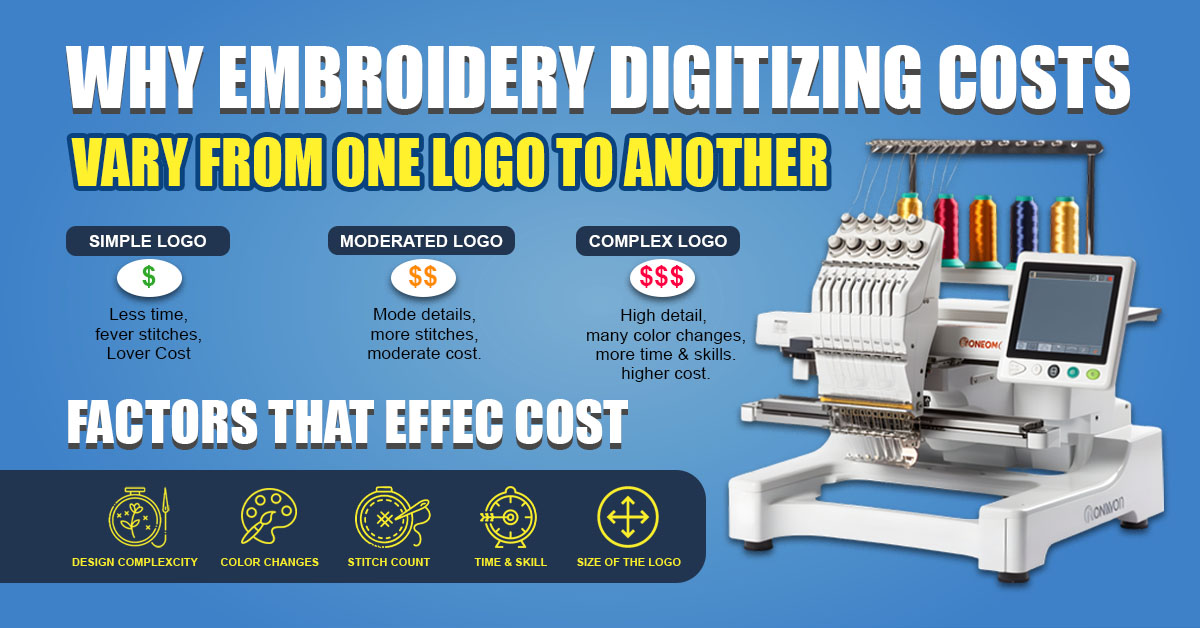
When business owners, apparel decorators, and custom clothing brands look to convert flat artwork into a stitch-ready format, one common question always arises: Why do embroidery digitizing costs vary so much from one logo to another?
Unlike standard printing, where pricing often depends mostly on ink coverage or the number of colors, embroidery digitizing is a technical art form. Translating a vector graphic or JPEG into a precise sequence of machine-readable commands requires specialized skills, software expertise, and careful planning.
At Aqua Digitizing, we believe in complete transparency. Understanding the core elements that shape digitizing prices helps you budget smarter, optimize your artwork, and get the highest quality results for your brand. Let’s dive into the primary reasons why embroidery digitizing costs differ across various logos.
1. Design Complexity and Detail Level
The intricacy of your artwork is one of the most significant cost drivers.
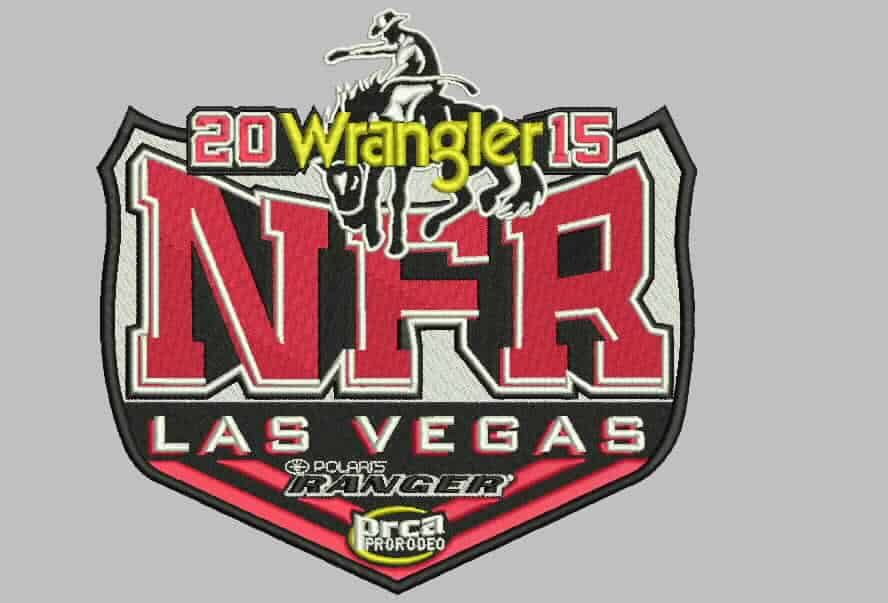
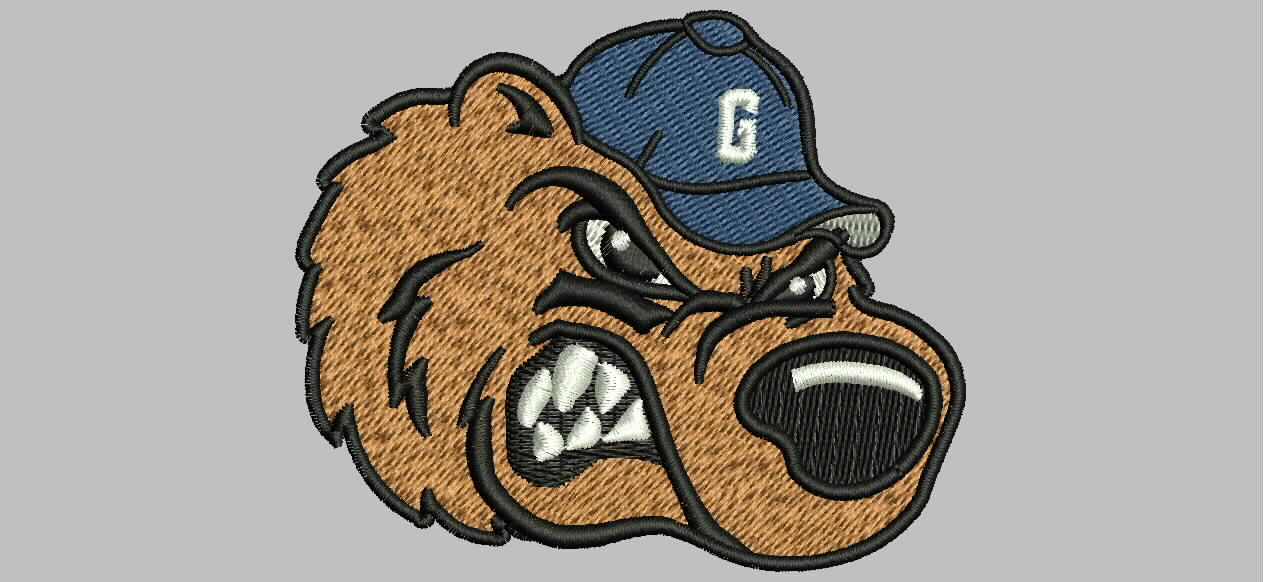
Simple vs. Intricate: A minimalist text-based logo or a clean, bold geometric shape requires minimal digital mapping. However, logos featuring fine lettering, complex gradients, shadows, or intricate shading demand extensive manual refinement by an experienced digitizer.
The Extra Effort: Creating smooth curves and precise details requires specialized stitch angles and underlay settings to prevent fabric puckering, which naturally increases the time and cost required.
2. Stitch Count and Density
Stitches are the fundamental building blocks of any embroidered design.
The Volume Impact: Most digitizing services and pricing models calculate costs based on overall stitch count or tiered brackets. A small left-chest logo might only take 4,000 to 6,000 stitches, whereas a large, heavily filled jacket-back design can easily exceed 30,000 to 50,000 stitches.
Density Management: Higher stitch counts require more processing time, greater machine wear during sample testing, and higher thread consumption, all of which influence the final digitizing and production investment.
3. Number of Color Changes
Every time a color changes in an embroidery design, the embroidery machine must pause, cut the thread, and reset for the next spool.
Workflow Disruptions: Logos with a high frequency of color swaps or interlocking multi-colored elements require the digitizer to carefully sequence the pathing. This minimizes thread breaks and ensures clean jump stitches, adding specialized labor hours to the file preparation stage.
4. Design Size and Placement Requirements
The physical scale of a logo directly impacts how it must be digitized.
Scaling Challenges: Shrinking a detailed large design down to fit on a cap front or expanding a small logo for a full back requires entirely different density adjustments. Digitizers must re-evaluate pull compensation and stitch types to ensure the logo doesn’t distort or warp the fabric when rendered at different scales.
5. Fabric Compatibility and Special Effects
Not all fabrics behave the same way under a high-speed embroidery needle.
Challenging Materials: Sturdy fabrics like denim or canvas handle dense stitches easily, while delicate textiles (like silk or performance activewear) or stretchy knits require specialized underlay patterns and pull compensations to prevent puckering or tearing.
Special Techniques: Incorporating specialty effects like 3D puff embroidery or textured multi-layered appliqué requires advanced technical digitizing expertise, raising the complexity tier of the project.
6. Turnaround Time and Urgency
Time is often of the essence in the apparel industry.
Standard vs. Rush Orders: Standard digitizing files are usually delivered within 24 hours. However, urgent requests or rush turnarounds require dedicated priority handling, after-hours processing, or immediate queuing, which often carries an expedited service fee.
Quick Reference: Embroidery Digitizing Cost & Complexity Breakdown
A quick guide to help you understand how logo types translate into technical specifications:
1. Simple Left-Chest Text / Logo
Stitch Count: 3,000 – 5,000 stitches
Turnaround Time: 12 – 24 Hours
Cost Factor: Minimal layout mapping and simple embroidery work.
2. Moderate Corporate Logo
Stitch Count: 6,000 – 12,000 stitches
Turnaround Time: 24 Hours
Cost Factor: Balanced color changes and clean vector line work.
3. Complex Jacket Back / 3D Puff Designs
Stitch Count: 15,000 – 35,000+ stitches
Turnaround Time: 24 – 48 Hours
Cost Factor: High density, advanced underlay settings, and special 3D puff effects.
Smart Tips to Optimize Your Embroidery Digitizing Costs
If you want to keep your digitizing and production costs efficient without compromising visual appeal, keep these expert tips in mind:
Simplify Your Palette: Reduce unnecessary color variations where possible to streamline machine run-time and setup.
Clean Up the Artwork: Provide high-resolution vector files (AI, EPS, or high-DPI PDFs) rather than low-quality bitmaps, reducing vector-to-stitch cleanup time.
Explore Related Services: Combine your digitizing order with professional Vector Art Conversion to ensure brand asset uniformity across print and stitch formats.
Aqua Digitizing Team
With years of hands-on experience in the custom apparel and embroidery decoration sector, the digital artists and technicians at Aqua Digitizing specialize in turning complex vector artwork into flawless, production-ready DST, PES, and EMB files. Our commitment is to reduce thread breaks, lower machine downtime, and bring your brand designs to life with uncompromised precision.
Experience Precision Digitizing with Aqua Digitizing
Navigating embroidery file preparation doesn’t have to be complicated. At Aqua Digitizing, our expert team combines advanced software proficiency with industry experience to deliver flawless, machine-ready files tailored to your specific garments. Whether you are scaling up a corporate apparel line or launching a custom merchandise brand, we provide top-tier quality, fast turnarounds, and crystal-clear pricing.
Ready to bring your logo to life with precision stitches? Contact Aqua Digitizing today for a transparent quote and experience professional embroidery digitizing at its finest.
Frequently Asked Questions (FAQs)
Q: Why do simple-looking logos sometimes cost more to digitize?
A: Even if a logo looks simple visually, it may contain fine lettering, tight registration points, or require intricate underlay settings to sew cleanly on difficult fabrics like performance wear, requiring precise manual work by the digitizer.
Q: How does fabric choice impact the digitizing process?
A: Different fabrics stretch, pull, and absorb stitches differently. An expert digitizer adjusts pull compensation and stitch density based on whether your design is going on a flat cotton cap, a textured beanie, or a smooth polo shirt.
Q: What is the standard turnaround time for files at Aqua Digitizing?
A: Most standard custom embroidery digitizing orders are delivered within 24 hours, with rush options available for urgent production runs.