Embroidery Digitizing Pricing Guide: What Custom Logo Digitizing Really Costs
When you want to embroider a logo on uniforms, hats, jackets, promotional products, or custom apparel, one of the first questions you’ll ask is: How much does embroidery digitizing cost?
There are several factors to consider, including design complexity, stitch count, logo size, and turnaround time. You can avoid overpaying for custom logo digitizing by understanding these pricing variables.
Let’s break down embroidery digitizing pricing, explain what affects pricing, and share expert tips for getting the best embroidery files.
Embroidery digitizing: What Is It?
You digitize embroidery by converting artwork, logos, and designs into a digital embroidery file that embroidery machines can read.
Professional digitizing involves manually assigning stitch types, directions, densities, and sequencing to ensure your embroidered design looks perfect.
Digitizing a file helps:
Make your stitches better
Thread breaks can be reduced
Make the logo clearer
Errors should be minimized
Consistently embroider
Even the best embroidery machine can’t produce good results without professional digitizing.
How Much Does Embroidery Digitizing Cost?
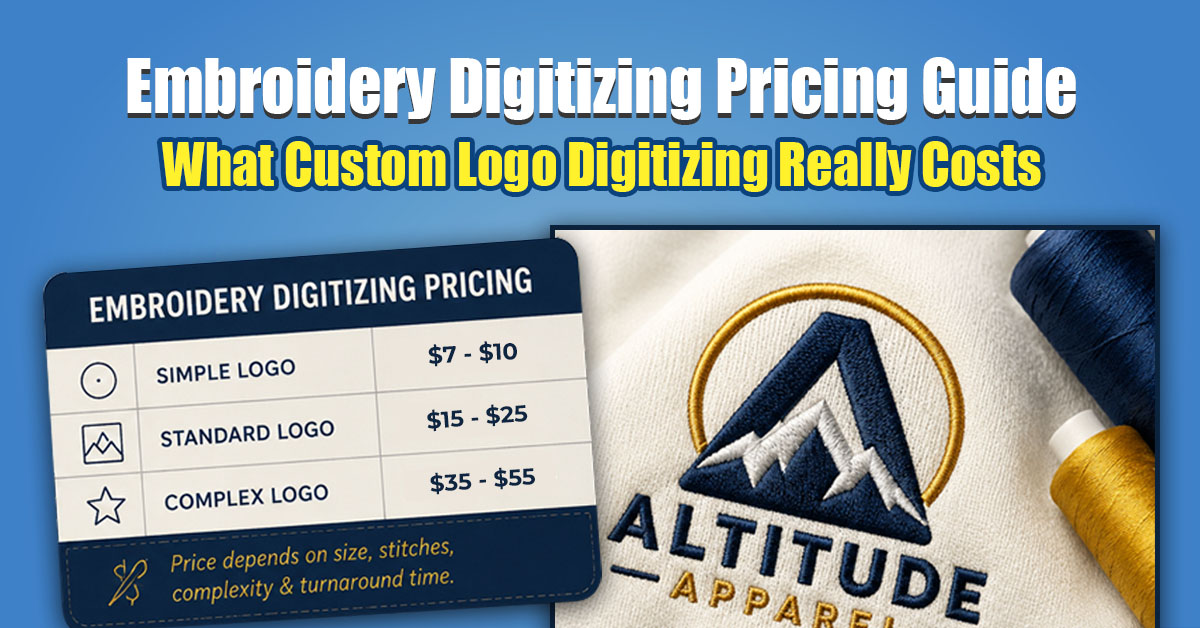
Depending on the complexity and size of the logo, digitizing costs typically range from $10 to $150+.
Chart of average embroidery digitizing prices
The typical price range for logos is: Small Logo (Under 3″)$10 – $30Medium Logo (3″–6″)$30 – $60Large Logo (Over 6″)$60 – $150+
Specialty embroidery projects, 3D puff embroidery designs, and highly detailed logos may cost more.
Factors affecting embroidery digitizing prices
Making informed purchases starts with understanding what drives digitizing costs.
1. Complexity of the design
Pricing is often influenced by design complexity.
Simple logos with:
Basic shapes
Details are minimal
Few colors
Lettering is big
Digitizing them is usually faster and cheaper.
Artwork with more complexity:
Text is small
Patterns that are intricate
Details matter
Color changes multiple times
Stitching layers
This requires a lot more manual labor.
Result: Higher complexity equals higher digitizing costs.
2. The stitch count
Digitizers estimate pricing by how many stitches they need.
Examples:
5,000 stitches = cheaper
20,000 stitches = moderate price
20,000+ stitches = premium
More stitch counts mean more programming time and more embroidery production costs.
3. Size of the logo
More stitches are needed for bigger designs.
For example:
There are 5,000 to 8,000 stitches in a left-chest logo.
30,000 stitches isn’t uncommon for full-back jackets.
To keep the quality and stitch coverage of large designs, additional digitizing adjustments are needed.
4. Time to turn around
You need your design done ASAP?
There’s usually an extra charge for rush services.
Turnaround options include:
The standard delivery time is 24–72 hours
Fast service: Same day
Digitizing in an emergency: Within hours
You can save money by planning ahead and avoid rush charges.
5. Experience and skill level with the digitizer
Digitizers with years of experience usually charge more.
Digitizers with experience usually provide:
Optimized stitching
Embroidery output is cleaner
Revisions are fewer
Efficiencies improved
You can save money by paying a little more upfront.
Watch out for hidden costs
Ask about additional charges when comparing embroidery digitizing services:
Fees for revisions
Charges for rush orders
Conversion fees for file formats
Embroidery effects
Different sizes
Reproduction of vector art
Make sure you get a full price breakdown before you order.
How to Get the Best Value for Custom Logo Digitizing
Get quotes from multiple providers
Make sure you don’t just choose based on price.
Analyze:
Quality of portfolios
Reviews from customers
Typical turnaround time
Policies that need to be revised
Support is available
You don’t always have to go for the cheapest option.
Samples are available
You should be able to see examples of previous work from professional digitizers.
Samples to review:
The accuracy of your stitches
Clarity in the lettering
Defining edges
Quality of embroidery overall
Make your logo simpler
Lower digitizing costs while maintaining brand recognition by reducing unnecessary design elements.
Get rid of:
Just a little something
Gradients are too big
Element overlap
It’s often cheaper and easier to embroider simpler designs.
Discounts for bulk orders
Discounts are offered by many digitizing companies:
Orders with multiple logos
Accounts for companies
Businesses that make promotional products
Shops that do embroidery
Customers who keep coming back
You can save a lot on long-term costs if you use digitizing services regularly.
Cheap embroidery digitizing: Is it worth it?
Low prices might seem attractive, but they can sometimes lead to:
Stitch quality is bad
Breaking threads a lot
Logos distorted
Revised multiple times
Delays in production
Your embroidered products’ appearance is directly impacted by professional digitizing.
Quality digitizing often produces better long-term results and lower embroidery production costs.
Final Thoughts
Business owners, apparel brands, embroidery shops, and individuals who want professional embroidered logos need to understand embroidery digitizing pricing. Design complexity, stitch count, logo size, turnaround requirements, and digitizer expertise affect cost.
Instead of focusing on the lowest price, prioritize quality, experience, and reliability. Professionally digitized embroidery files improve stitch quality, reduce production issues, and make sure your logo looks great.
Investing in quality embroidery digitizing is the first step to achieving professional embroidery results, whether you’re creating uniforms, promotional products, hats, jackets, or branded apparel.
Ready to get started? Transform your logo into a flawless embroidery-ready design with an embroidery digitizing service.
Frequently Asked Questions
Why does embroidery digitizing cost money?
Digitizing requires specialized software, technical expertise, and manual programming to create machine-readable embroidery files.
Is digitizing a one-time cost?
In most cases, yes. Once your logo is digitized, the file can typically be reused for future embroidery projects.
Can any image be digitized?
Most logos and artwork can be digitized, although highly detailed images may require simplification for optimal embroidery results.
How long does embroidery digitizing take?
Standard turnaround is usually between 24 and 72 hours, depending on complexity and provider workload.
What’s the most common file format?
Here are some embroidery file formats:
DST
PES
EMB
EXP
JEF
VP3
The format you need depends on your embroidery machine.