A Complete Guide to Choosing Custom Patches Backing
Getting Started : The importance of custom patch backing
There’s more to custom patches than just decoration. They’re symbols of identity, brand visibility, and organization pride. Any custom patch will be more effective if it has the right backing. We’ll go over the different types of patch backings, their pros and cons, and how to choose the right one.
No matter what you’re customizing patches for, like military uniforms, sports teams, promotional events, or fashion accessories, the backing you choose is crucial.
How do Custom Patches Backings work?
In custom patches, the backing is the material or attachment method on the reverse side. It affects how durable, removable, or permanent the patch is, as well as how it attaches to clothing, gear, and surfaces.
Backings for custom patches
Check out these popular patch backings:
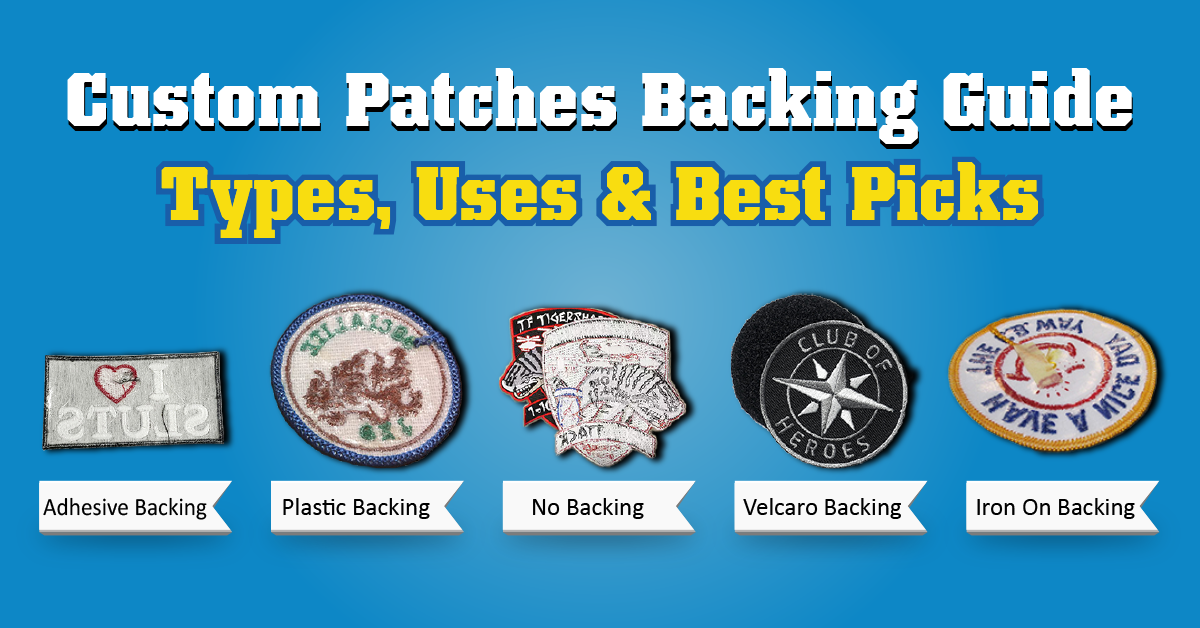
🧵 1. Backing that sews on
Sewn directly onto fabric with a needle and thread.
Long-lasting use on jackets, uniforms, and bags.
The pros:
Durable
It’s washable
Embroidered or detailed designs work great
The cons are:
Needs sewing skills or a tailor
Application takes a long time
🔥 2. Backing that irons on
Heat-activated adhesive makes it easy to attach.
Patch cotton or polyester clothes yourself.
The pros:
Easy peasy
There’s no sewing involved
The cons are:
Synthetics and heat-sensitive fabrics aren’t recommended
After repeated washings, it may loosen up
To avoid scorching, always use a press cloth between the patch and iron.
🎯 3. Hook-and-loop back (velcro)
Comes with a hook side for the patch and a loop side for the surface.
Ideal for: Military gear, tactical vests, or swappable branding.
The pros:
It’s reusable
Patches can be swapped anytime
The cons:
You’ll need a loop fabric that works
If not cleaned, it’ll wear out
🏷️ 4. Peel-and-stick back
Temporary backing with self-adhesive.
It’s best for: Promotions, giveaways, and one-day events.
The pros:
Application in a flash
No tools needed
The cons are:
It’s not durable
If it’s humid or wet, it loses stickiness
🧲 5. Backing with magnets
Patches stick to metal with a thin magnetic layer.
Magnets are great for fridges, lockers, and company giveaways.
The pros:
There’s no adhesive or sewing required
It’s reusable and damage-free
The cons:
Doesn’t work on anything else
🔘 6. Loop back for buttons
Included is a loop so you can hang it on a button or hook.
For: Decorative patches or temporary garment use.
The pros:
You don’t need any application tools
Perfect for collectors or kids’ clothes
The cons are:
Only for specific garments with buttons
What to look for when choosing a patch backing
Choosing the right backing involves a lot of considerations:
What to consider PurposeIs it permanent, temporary, or reusable? What kind of surface or fabric will the patch be applied to? Would you prefer iron-on or adhesive options that don’t require sewing? Are you going to wash the patch often, use it a lot, or expose it to harsh environments? Do you need to change or remove the patch often (like Velcro or magnets)?
The importance of the right backing
There’s only so much you can do with a patch if it’s not attached to a good backing. Patches can peel, get damaged, or even disappear if the backing is bad. Meanwhile, the right backing for custom patches makes sure:
Adhesion is strong
Life expectancy
Alignment with the garment
Purpose-driven functionality
Custom patches: How to keep them up to date
You can extend the life of your patch by taking good care of it, especially if it’s on a garment:
🧼 Washing Tips:
If you’re sewing or ironing on your clothes, wash them inside out and don’t dry them on high heat.
Keep the hook-and-loop clean.
Avoid direct sunlight, water, and heat when applying adhesive.
Conclusion: Make Your Patch Stick—Literally and Figuratively
You need custom patches backing for everything from uniforms to fashion accessories. Understanding backing types and aligning them with your needs will help your patch last for a long time.
Consider your use case, fabric, and application method. There’s a backing for every need, whether permanent or temporary.
✅ Let’s talk about your options
Want a custom patch for your brand, team, or event? Find out what backing works best for your custom patch.
Frequently Asked Questions (FAQs) About Custom Patches Backing
❓ What is the most durable backing for custom patches?
Sew-on backing is the most durable option, especially for workwear, school uniforms, or tactical gear. It’s securely stitched into the fabric, making it highly resistant to wear and washing. According to Sew Guide, sew-on patches are ideal for heavy-duty and long-lasting use.
❓ Can I iron a patch onto any type of fabric?
Not all fabrics are suitable for ironing. Iron-on patches work best on cotton and polyester. Avoid using them on nylon, leather, or waterproof materials. For safety, refer to WikiHow’s Iron-On Patch Instructions for step-by-step guidance and fabric compatibility.
❓ Which patch backing is best for reusable applications?
Velcro backing (hook-and-loop) is ideal for reusable and interchangeable patches. This makes it popular among the military, first responders, and paintball teams. Military.com notes that Velcro allows soldiers to quickly switch unit identifiers during deployment.
❓ How do I apply an iron-on patch correctly?
To properly apply an iron-on patch:
Position the patch on the desired spot.
Use a pressing cloth between the patch and iron.
Press with firm heat for 15–30 seconds.
Let it cool fully.
For best results, follow Good Housekeeping’s Fabric Guide to ensure your fabric tolerates high heat.
❓ Are adhesive backings suitable for long-term use?
No. Adhesive or peel-and-stick backings are intended for short-term use only—perfect for events or promotional giveaways. As noted by Stahls’, adhesive patches may lose effectiveness in humid or high-friction environments.
❓ Can I wash garments with patches attached?
Yes, but use care:
Sew-on or iron-on patches: Turn garments inside out, use gentle cycles, and avoid high heat.
Velcro-backed patches: Remove the patch before washing to protect the hook-and-loop grip.
You can find more care tips in Tide’s Fabric Washing Guide.
❓ What backing should I use for patches on metal surfaces?
Use magnetic backings for refrigerators, toolboxes, or lockers. They’re especially useful for corporate gifts or novelty items. For custom fridge magnets and metal decor, Vistaprint offers additional inspiration and design tools.
❓ How do I choose the right custom patch backing?
Here’s a summary:
Permanent use → Sew-on or iron-on
Reusable use → Velcro or magnetic
Temporary use → Adhesive or button loop
Fabric compatibility → Check material tolerance for heat or sewing
For a deeper look at choosing the right patch for your material and usage, Patchion provides a helpful breakdown of each backing type.