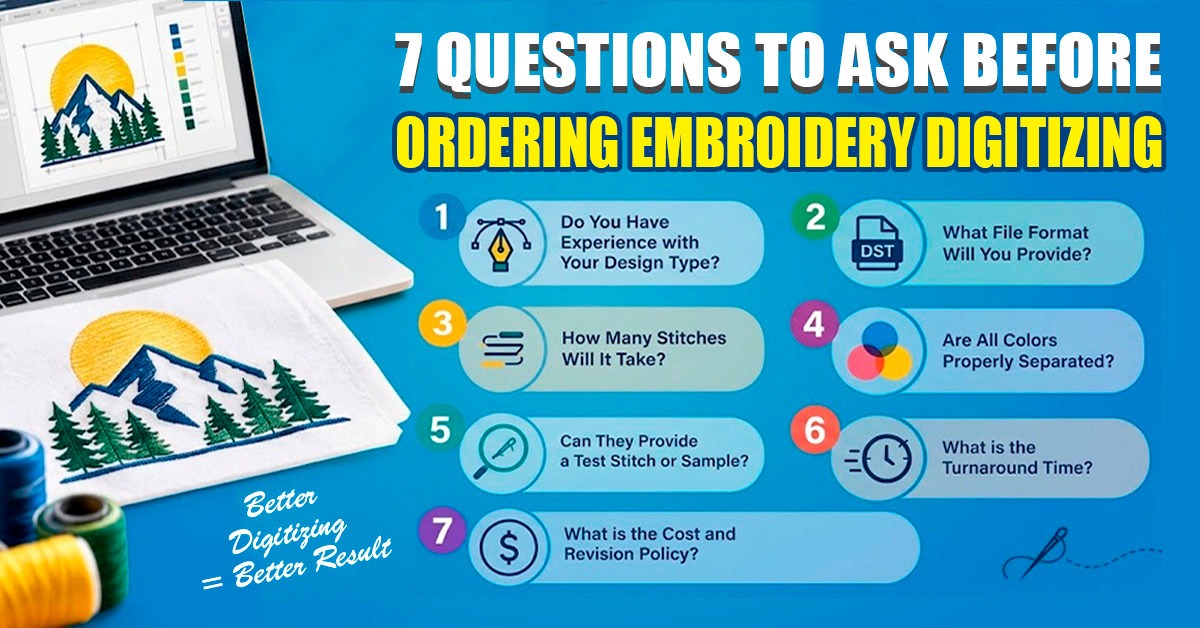
7 Questions to Ask Before Ordering Embroidery Digitizing
Have you ever approved an embroidery design on your computer, only to see a completely different result after stitching?
The logo looks blurry. Small text becomes unreadable. Stitches feel too heavy. The design does not sit properly on the fabric.
Many businesses assume these problems happen because of the embroidery machine or thread quality. But in many cases, the real issue starts much earlier — with poor embroidery digitizing.
A professionally digitized embroidery file is the foundation of a high-quality finished product. embroidery file formats and machine compatibility The right digitizer understands how stitches behave on different fabrics, how machines read designs, and how to maintain clean details during production.
Whether you are creating branded uniforms, custom apparel, hats, jackets, or promotional products, choosing the right embroidery digitizing service can save you time, money, and production headaches.
Before sending your artwork to any digitizing company, ask these 7 important questions.
1. Have You Digitized Designs Similar to Mine Before?
Not every embroidery design can be handled the same way.
A simple company logo, detailed artwork, small lettering, cap embroidery, and jacket-back designs all require different digitizing techniques.
Before placing your order, ask:
- Have you worked on similar embroidery designs?
- Do you have experience with my type of fabric?
- Can you handle detailed artwork and small text?
An experienced digitizer understands that embroidery is not just about converting an image into stitches.
They consider:
- Fabric type
- Stitch direction
- Thread behavior
- Design size
- Machine limitations
- Final appearance
For example, a design created for a structured cap may need completely different adjustments compared to embroidery on a soft hoodie.
Working with an experienced embroidery digitizer helps ensure your design looks professional after production.
2. Which Embroidery File Formats Do You Provide?
Before ordering, always confirm that the digitizer can provide the correct file format for your embroidery machine.
Different machines require different formats, such as:
- DST
- PES
- EXP
- JEF
- VP3
- HUS
- XXX
A high-quality embroidery digitizing service should understand machine requirements and provide a production-ready file.
The wrong file format can create unnecessary issues during embroidery production, even if the design itself is good.
A professional digitizer will ask about your machine requirements before final delivery.
3. How Do You Ensure Stitch Quality and Design Accuracy?
A good embroidery file is not created by simply using automatic conversion software.
Professional digitizing requires experience and technical knowledge.
A skilled digitizer carefully manages:
Stitch Direction
Proper stitch angles create better texture and a cleaner appearance.
Stitch Density
The correct density prevents designs from becoming too heavy or causing fabric problems.
Underlay Stitches
Underlay provides stability and helps the design maintain its shape.
Pull Compensation
Fabric naturally moves during embroidery, so adjustments are needed to maintain accurate results.
Ask your digitizer how they handle these technical details.
A professionally digitized file should produce:
✔ Clean edges
✔ Smooth lettering
✔ Balanced stitch coverage
✔ Fewer thread breaks
✔ Better embroidery quality
4. Do You Provide a Preview Before Final Delivery?
Before production begins, it is important to review how your design will stitch.
Ask the digitizing company:
- Do you provide a preview image?
- Can I request changes?
- Is testing recommended for complex designs?
A preview helps identify potential issues before the design reaches the embroidery machine.
Small adjustments in size, spacing, colors, or stitch direction can make a major difference in the final result.
Professional digitizers understand that communication is an important part of delivering quality embroidery files.
5. What Is Your Turnaround Time?
Speed matters, especially for businesses working with deadlines.
You may need embroidery digitizing for:
- Employee uniforms
- Sportswear
- Brand merchandise
- Fashion collections
- Bulk production orders
Before ordering, ask:
- How quickly can you complete my design?
- Do you offer rush services?
- How do you handle urgent projects?
A reliable embroidery digitizing company should provide realistic delivery times while maintaining quality standards.
Fast service is valuable, but accuracy should never be sacrificed.
6. What Is Your Revision Policy?
Even experienced digitizers sometimes need adjustments to achieve the best embroidery result.
Before placing your order, understand the revision process.
Ask:
- Are revisions included?
- How many changes are allowed?
- What type of modifications are covered?
A transparent revision policy shows that a company cares about customer satisfaction.
A professional digitizer should be willing to improve the file until it meets production requirements.
7. Why Should I Choose Your Embroidery Digitizing Service?
With many digitizing companies available online, choosing the right partner can feel difficult.
Instead of focusing only on price, look for quality indicators:
Experience
How long have they been providing embroidery digitizing services?
Quality Control
Do they review files before delivery?
Communication
Do they respond quickly and understand your requirements?
Industry Knowledge
Do they understand commercial embroidery production?
The cheapest service is not always the best option. A poorly digitized file can cost more through wasted materials, machine time, and production problems.
A reliable digitizing partner focuses on consistent quality and long-term relationships.
Common Mistakes People Make When Ordering Embroidery Digitizing
Many customers face problems because they:
❌ Choose only based on the lowest price
❌ Do not provide correct artwork details
❌ Ignore fabric and size requirements
❌ Do not check file compatibility
❌ Skip reviewing the digitized preview
Avoiding these mistakes can significantly improve your embroidery results.
Why Professional Embroidery Digitizing Matters
Embroidery machines follow instructions from digitized files.
The quality of that file directly affects the final product.
Professional embroidery digitizing helps achieve:
✔ Sharp logo details
✔ Clean lettering
✔ Better thread management
✔ Reduced production problems
✔ Professional brand presentation
For businesses, high-quality embroidery represents your brand. A poorly stitched logo can negatively affect how customers view your products.
Why Choose Aqua Digitizing?
At Aqua Digitizing, we understand that every embroidery project requires more than just file conversion.
Our approach focuses on:
- Accurate stitch planning
- Professional design handling
- Machine-ready embroidery files
- Attention to small details
- Customer-focused communication
Whether you need logo digitizing, custom embroidery designs, or complex artwork conversion, our goal is to create files that deliver reliable embroidery results.
Final Thoughts
Choosing the right embroidery digitizing service is an important step toward achieving professional embroidery results.
Before placing an order, ask about experience, file formats, quality control, revisions, and turnaround time.
The right questions can help you avoid production issues and ensure your artwork transforms into clean, high-quality embroidery.
If you are looking for reliable embroidery digitizing services, Aqua Digitizing is ready to help bring your designs to life.